





















Dash: White Wave Challenge!
Dash: White Wave Challenge! - Play Online
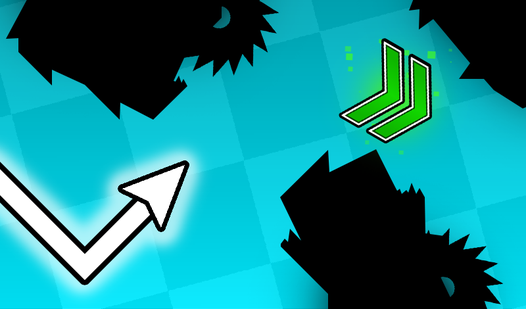
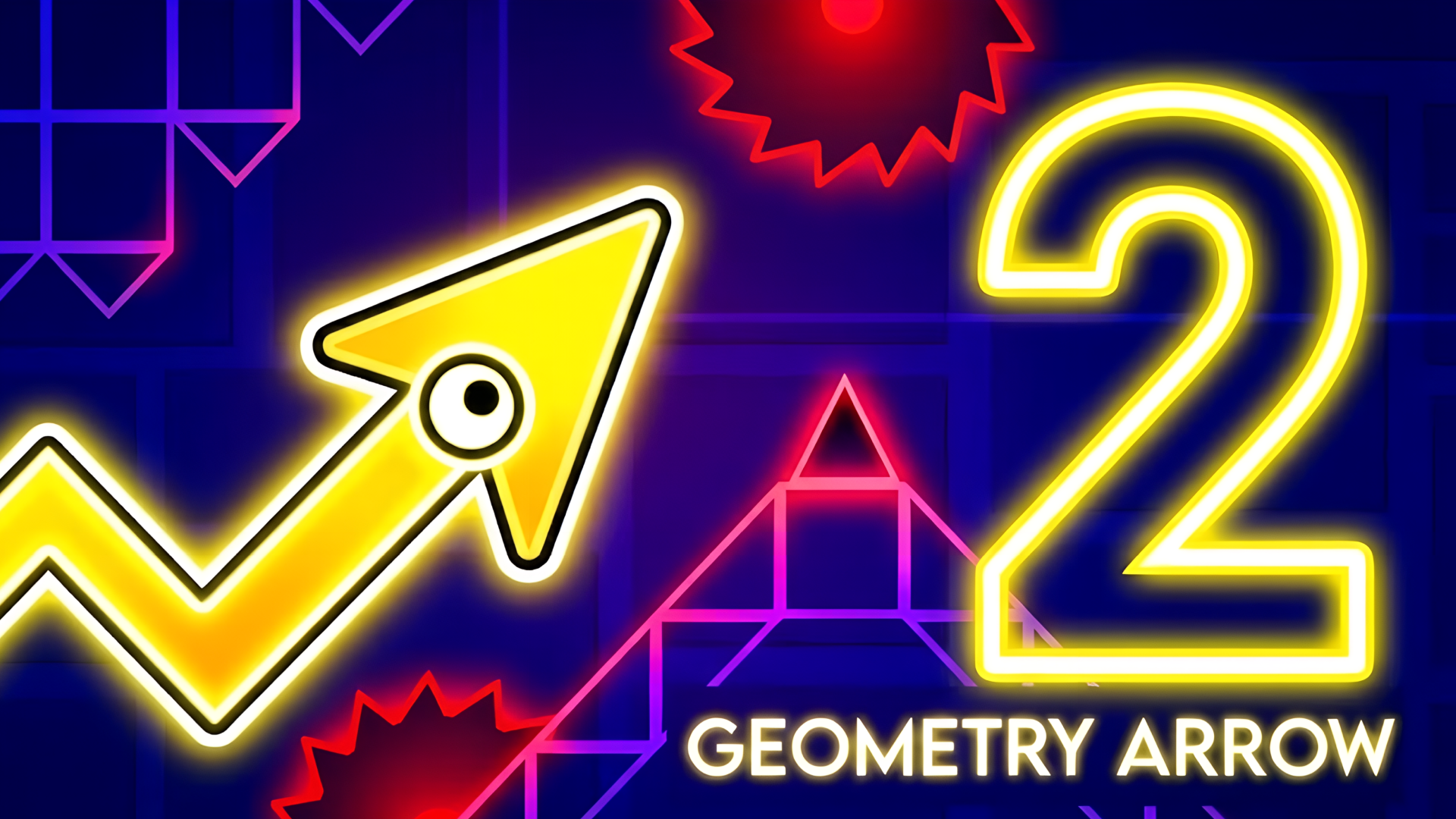
Hold or release. That's it. Sounds easy? Navigate a zigzagging projectile through spiked corridors and spinning saws without touching black obstacles. One mistake sends you back to the start. Arcade games fans know the drill: quick reflexes, zero forgiveness, instant restarts. Dash: White Wave Challenge! strips away complexity and hands you a single input. Master the rhythm or die trying.
How to Play Dash: White Wave Challenge!
Reach the end of each level. Avoid every black obstacle. Hit portals to flip gravity or shift your trajectory. Desktop players hold Space, W, Up Arrow, or Mouse Button to angle the wave upward. Release to drop. Mobile users press the screen to rise, lift to fall. Timing matters more than speed. Hesitate and you slam into a saw. Panic and you overshoot into ceiling spikes.
Vector Control and Corridor Survival
Your wave carves a zigzag path through narrow passages. Saws hang from ceilings. Spikes jut from floors. Portals appear as glowing rings, triggering gravity shifts or vector changes mid-flight. Geometry Neon Dash World Two fans recognize this loop: memorize hazard patterns, execute precise inputs, repeat until muscle memory kicks in. High-contrast silhouettes make obstacles pop against gradient backgrounds. No clutter. Just you, the wave, and lethal geometry.
Level Difficulty and Progression
Early levels teach you the cadence. Hold for half a second, release for a beat, hold again. Later stages compress those windows. Saws rotate in sync with your trajectory. Spikes appear in clusters requiring split-second adjustments. No checkpoints mid-level. Mess up near the finish? Start over. Vex 3 players know this grind: trial, death, retry until your inputs sync with the level design. Every failed run sharpens your timing.
Pro Tips for Precision Runs
Tap, don't hold. Short bursts keep your wave stable through tight gaps. Watch the ceiling-floor spacing, not your wave. Peripheral vision catches hazards earlier. Portal rings appear seconds before activation—prep your input adjustment. Mute audio if background noise breaks your concentration. Some players prefer silence to lock into the visual rhythm. Slope Bike veterans apply the same logic: anticipate obstacles, not react to them. By the third attempt, your hands know when to release before your eyes register the spike.
Key Features
- Single-Button Input: Space, W, Up Arrow, Mouse Button, or screen tap controls vertical movement across all platforms.
- Vector-Based Silhouettes: High-contrast black obstacles against gradient backgrounds with particle effects for portals.
- Gravity-Flip Portals: Glowing rings trigger trajectory changes, forcing mid-flight input adjustments.
- Multi-Level Gauntlet: Progression system unlocks stages with tighter corridors and synchronized hazard patterns.
Who is Dash: White Wave Challenge! for?
Hyper-casual players hunting quick mobile sessions. Games For Teens seeking reflex challenges without complex mechanics. Precision-platformer addicts craving hardcore difficulty. Geometry Dash veterans looking for wave-mode intensity stripped to its core. Commuters needing instant browser action—no downloads, no installs. Games For Pc enthusiasts can jump in from any device. Patience required. Rage quits expected.
Developer
Dash: White Wave Challenge! was developed by knedge. This single-input arcade runner condenses rhythm-platformer mechanics into browser-based sessions, letting players test their reflexes through geometric obstacle courses without installation.
Controls
- Space / W / Up Arrow / Mouse Button (Desktop): Hold to angle the wave upward, release to descend.
- Touch (Mobile): Press the screen to rise, lift your finger to drop.
- Pause Button: Top-right corner to freeze the action.
FAQ
How do I avoid saws in Dash: White Wave Challenge?
Watch the rotation pattern before entering saw zones. Tap your input key in short bursts to keep the wave stable through gaps. Releasing too early drops you into floor spikes; holding too long crashes you into the saw. Geometry Dash Lite players know this rhythm—memorize hazard timing through repeated runs until muscle memory handles the input sequence.
What happens when I hit a portal?
Portals trigger gravity flips or trajectory shifts. Your wave inverts direction or changes its vector angle mid-flight. The glowing rings appear seconds before activation, giving you time to adjust your input. Some portals reverse your controls—holding makes you descend instead of rise. Anticipate the flip before entering the ring to maintain corridor alignment.
Can I play Dash: White Wave Challenge! on mobile?
Yes. Touch the screen to lift the wave, release to drop. The game runs on iOS and Android browsers without downloads. Single-finger input works for all levels. Mobile sessions sync the same mechanics as desktop—no control compromises, just adapt your thumb timing to match keyboard cadence.
Why do I keep dying at the same spot?
Obstacle patterns require precise input timing. If you fail repeatedly at one section, your rhythm is off by milliseconds. Slow down your mental playback of that segment. Visualize when to hold and when to release before attempting the run. Some players mute audio to eliminate distractions. Hardcore platformers treat each death as data—adjust timing by fractions of a second until the wave threads the gap.
Are there checkpoints in Dash: White Wave Challenge?
No. Die anywhere in a level, restart from the beginning. This design forces you to master entire sections, not isolated fragments. Frustrating? Absolutely. Satisfying when you finally clear it? Also yes. The lack of checkpoints keeps runs short—most levels finish under 60 seconds if executed perfectly, making the retry loop instant.
Video